Earth and Space Sciences
Solid Earth
Vertical Alignment
TEKS:
| 5th | 5.10(C) |
NGSS:
| 4th: | 4-ESS1-1 |
Linked To

Downloads
- Download Visual
- Word wall visual
- Lesson Plan
-
Lesson Materials
-
 Teacher Guide
-
 Leveled Reading Passages
-
.svg.png)
Google Drive
Structured Conversation Questions
Observational
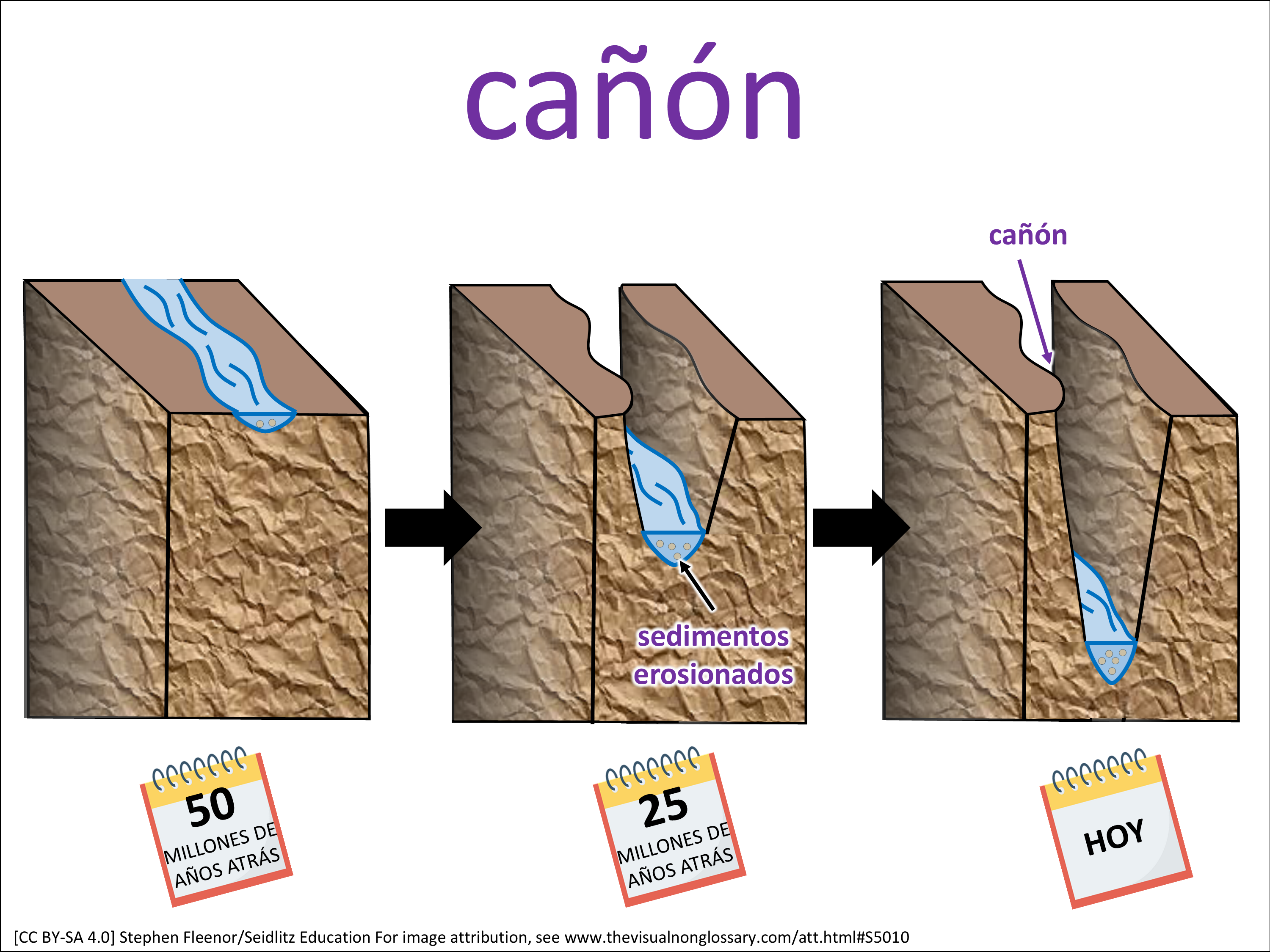
¿Cómo se forma un cañón?
Un cañón se forma por…Relational
¿Cómo está relacionado un cañón a la erosión?
Un cañón se relaciona a la erosión porque…Inferential
¿Cómo podría cambiar un cañón a lo largo de miles de años si el flujo de un río se vuelve más lento o más rápido con el tiempo?
Un cañón podría cambiar con el tiempo al…
Please log in to comment.
Students might notice in this visual:
- El río fluye a través de la roca en las tres imágenes.
- La tierra está siendo desgastada con el tiempo.
- El río transporta sedimentos mientras se mueve.
- Un cañón se forma durante muchos años.
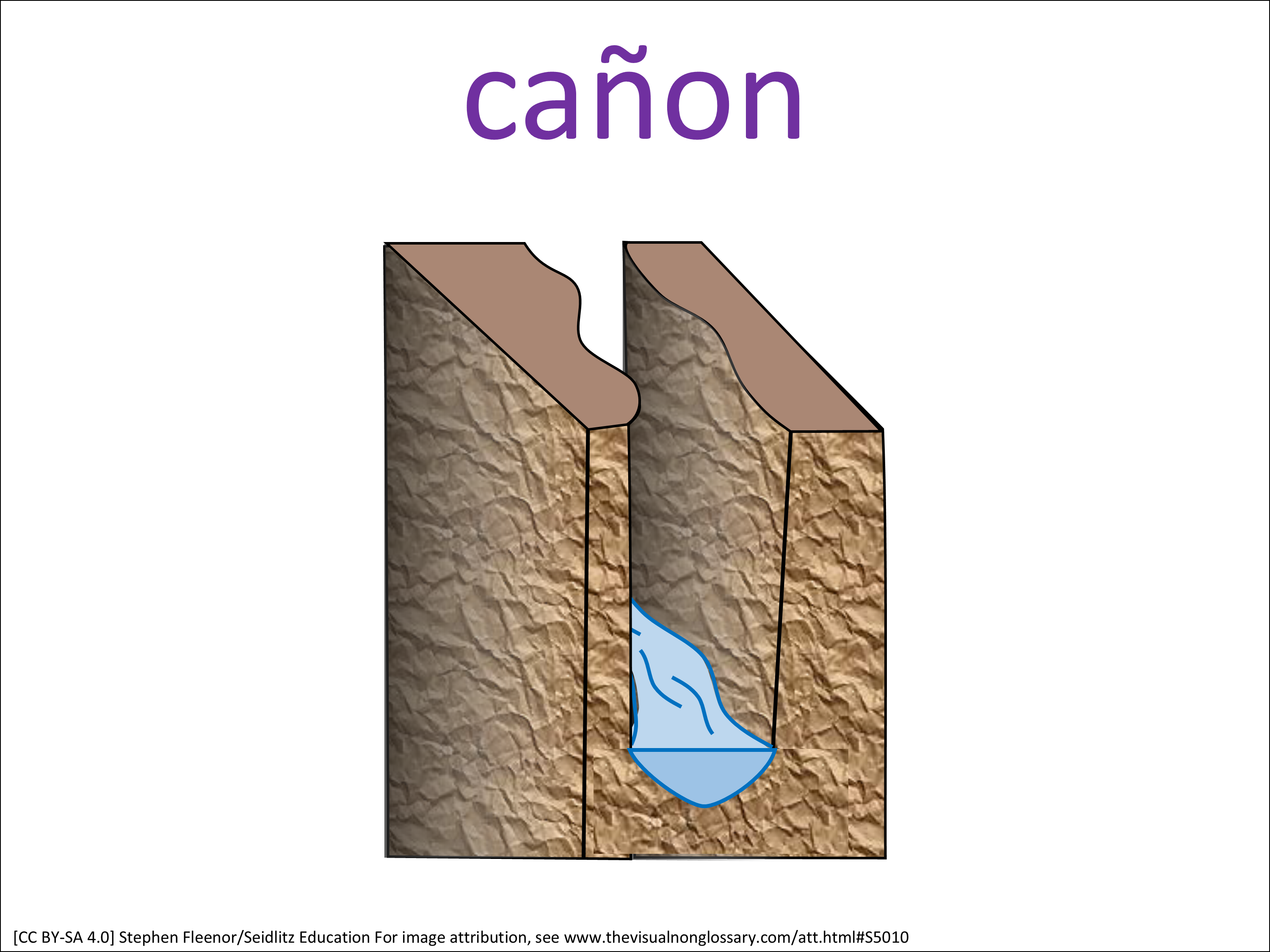
- La imagen final muestra un cañón profundo con lados empinados.
EXTENDING THE DISCUSSION
After the observational question, randomly call on one or more students to share what they or their partner answered. Then ask the class, “Did anyone notice…?” using the suggestions above or anything else you’ve noticed.
After the observational question, randomly call on one or more students to share what they or their partner answered. Then ask the class, “Did anyone notice…?” using the suggestions above or anything else you’ve noticed.

Students might wonder:
- ¿Cuánto tiempo tarda en formarse un cañón?
- ¿Qué causa que la erosión ocurra más rápido o más lento?
- ¿Cómo se rompe la roca?
- ¿Qué sucede con los sedimentos después de ser transportados?
- ¿Puede el viento o el hielo ayudar a formar un cañón?
EXTENDING THE DISCUSSION
After students have shared what they notice, ask the class, “Did anyone wonder…?” using the suggestions above or anything else you might think is interesting or relevant to the lesson.
After students have shared what they notice, ask the class, “Did anyone wonder…?” using the suggestions above or anything else you might think is interesting or relevant to the lesson.
Example student responses
To the observational question, ¿Cómo se forma un cañón?
LOW-LEVEL
Un cañón se forma cuando un río corta la roca con el tiempo.
HIGH-LEVEL
Un cañón se forma cuando el agua causa meteorización y erosión, rompiendo la roca y transportando sedimentos durante muchos años hasta formar un accidente geográfico profundo.
RESPONDING TO RESPONSES
Emphasize and celebrate each student’s use of the key vocabulary to support a culture of “no wrong answers.”
Emphasize and celebrate each student’s use of the key vocabulary to support a culture of “no wrong answers.”