Applications
Financial Literacy
Vertical Alignment
TEKS:
| 1st | 1.9(A)1.9(B)1.9(C)1.9(D) |
| 2nd | 2.11(A)2.11(B)2.11(C) |
| 3rd | 3.9(C)3.9(E)3.9(F) |
| 4th | 4.10(A)4.10(C)4.10(D)4.10(E) |
| 6th | 6.14(G)6.14(H) |
| 7th | 7.13(B)7.13(C) |
Linked To

Downloads
- Download Visual
- Word wall visual
- Lesson Plan
-
Lesson Materials
-
 Teacher Guide
-
 Leveled Reading Passages
-
.svg.png)
Google Drive
Structured Conversation Questions
Observational
What is saving?
Saving is...Relational
How is saving related to a discount?
Saving is related to discount because...Inferential
Why do you think it is harder for some people to build savings than others?
I think it is harder for some people to build savings than others because...
Please log in to comment.
Students might notice in this visual:
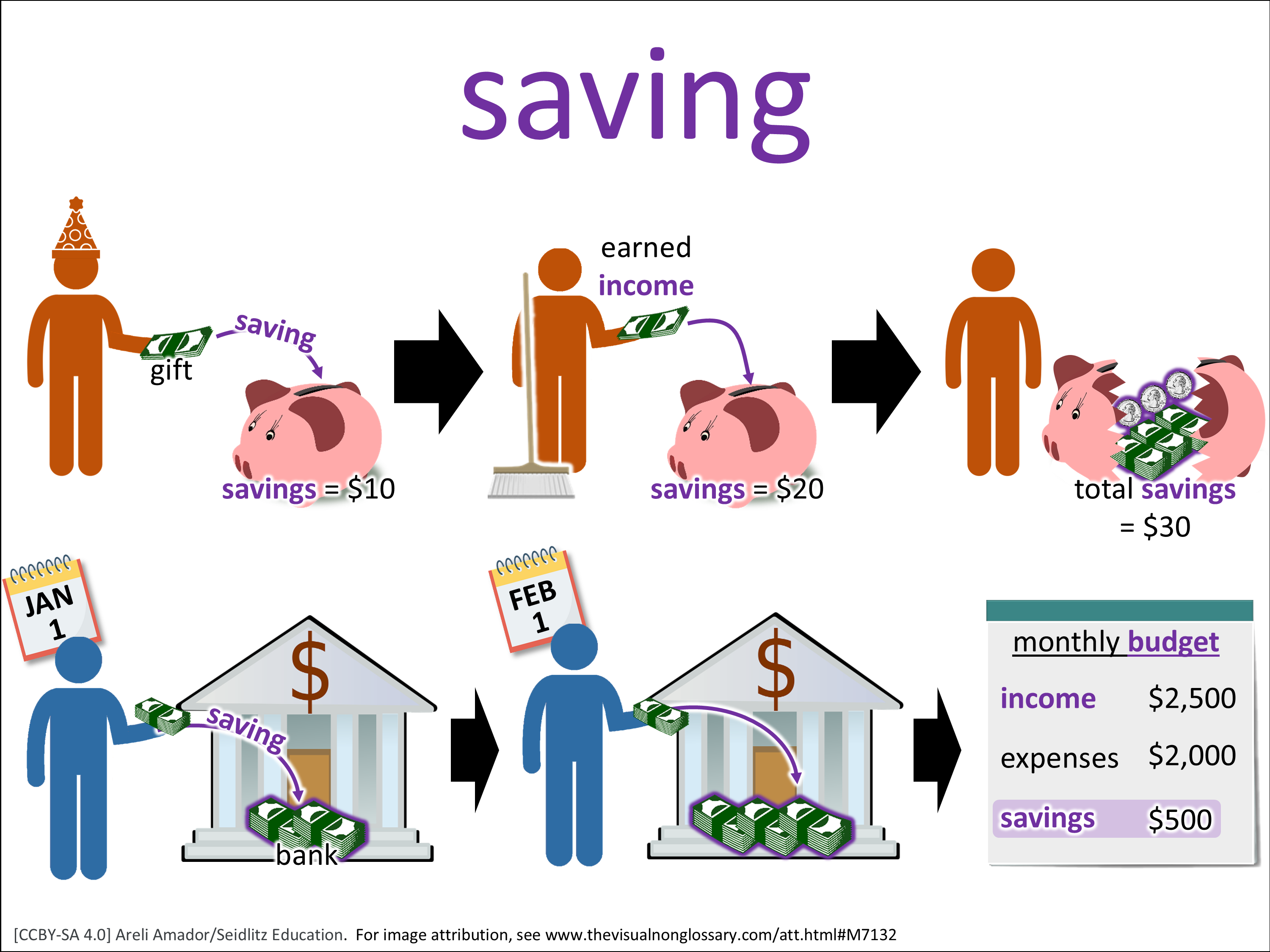
- Money is added to savings over time from different sources
- Income can come from different places, like gifts or work
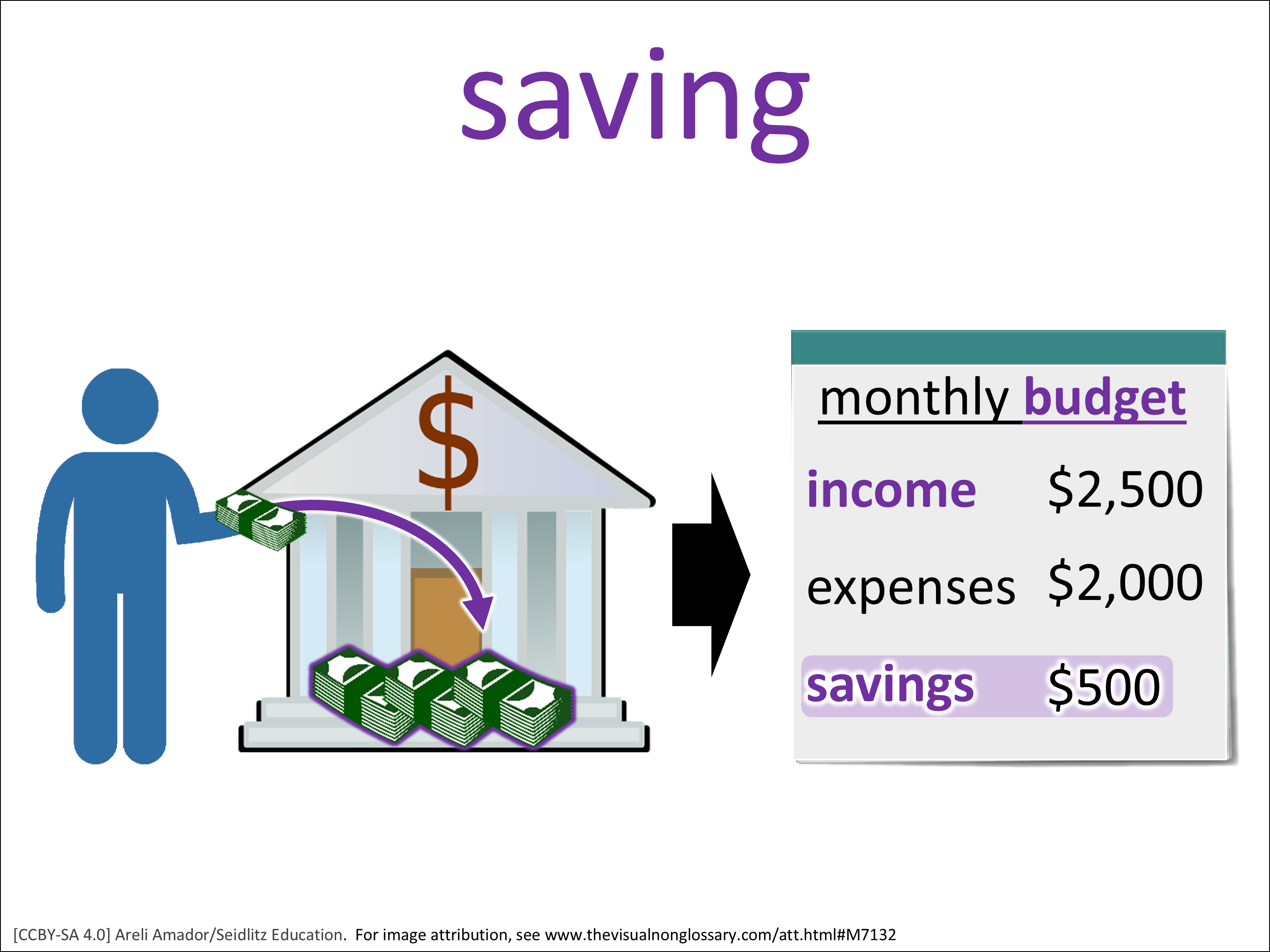
- A budget shows money coming in and going out
- Not all money is spent and some is set aside as saving
- The total amount of savings increases over time
EXTENDING THE DISCUSSION
After the observational question, randomly call on one or more students to share what they or their partner answered. Then ask the class, “Did anyone notice…?” using the suggestions above or anything else you’ve noticed.
After the observational question, randomly call on one or more students to share what they or their partner answered. Then ask the class, “Did anyone notice…?” using the suggestions above or anything else you’ve noticed.

Students might wonder:
- What affects how much money people can put into savings?
- What happens if someone has more expenses than income?
- How do people decide how much to put into saving?
- Why might someone not be able to save money every month?
- How do different types of income affect saving?
EXTENDING THE DISCUSSION
After students have shared what they notice, ask the class, “Did anyone wonder…?” using the suggestions above or anything else you might think is interesting or relevant to the lesson.
After students have shared what they notice, ask the class, “Did anyone wonder…?” using the suggestions above or anything else you might think is interesting or relevant to the lesson.
Example student responses
To the observational question, What is saving?
LOW-LEVEL
Saving is putting money away.
HIGH-LEVEL
Saving is when money from income is set aside instead of being spent, often as part of a budget to use later.
RESPONDING TO RESPONSES
Emphasize and celebrate each student’s use of the key vocabulary to support a culture of “no wrong answers.”
Emphasize and celebrate each student’s use of the key vocabulary to support a culture of “no wrong answers.”