Life Sciences
Evolution and Diversity
Vertical Alignment
TEKS:
| 3rd | 3.12(D) |
| 4th | 4.12(C) |
| 7th | 7.10(A) |
| Bio | B.9(A)B.9(B) |
NGSS:
| 4th: | 4-ESS1-1 |
| MS: | MS-ESS1-4 MS-ESS2-3 MS-LS4-1 MS-LS4-2 |
Linked To

Downloads
- Download Visual
- Word wall visual
- Lesson Plan
-
Lesson Materials
-
 Teacher Guide
-
 Leveled Reading Passages
-
.svg.png)
Google Drive
Structured Conversation Questions
Observational
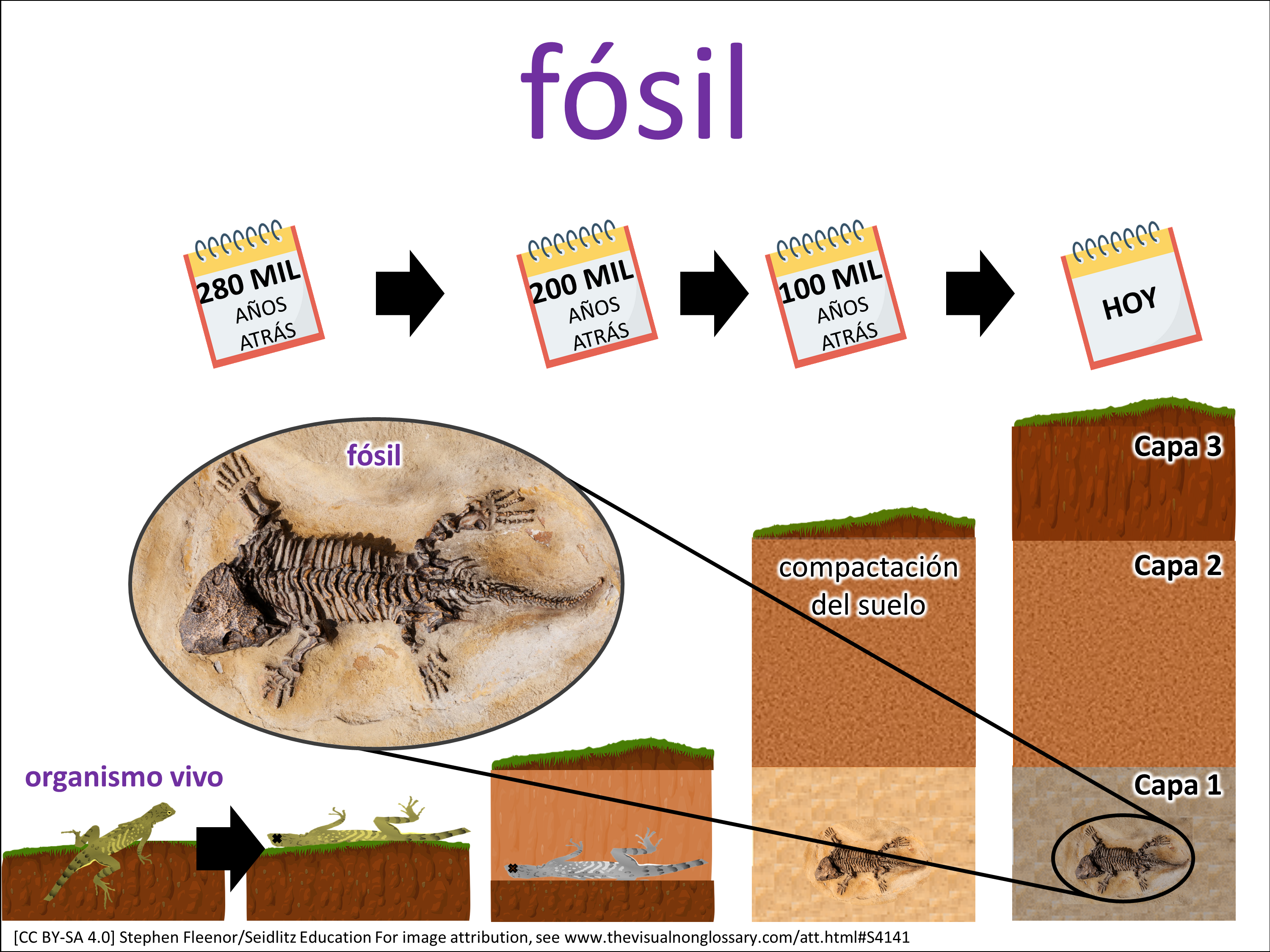
¿Cómo se forman los fósiles?
Los fósiles se forman por...Relational
¿Cómo se relaciona un fósil con un organismo vivo?
Un fósil está relacionado con un organismo vivo porque...Inferential
¿Qué tipo de información podrían brindarnos los fósiles sobre los ambientes pasados? ¿Por qué?
Basado en fósiles, podría inferir... sobre ambientes pasados porque...
Please log in to comment.
Students might notice in this visual:
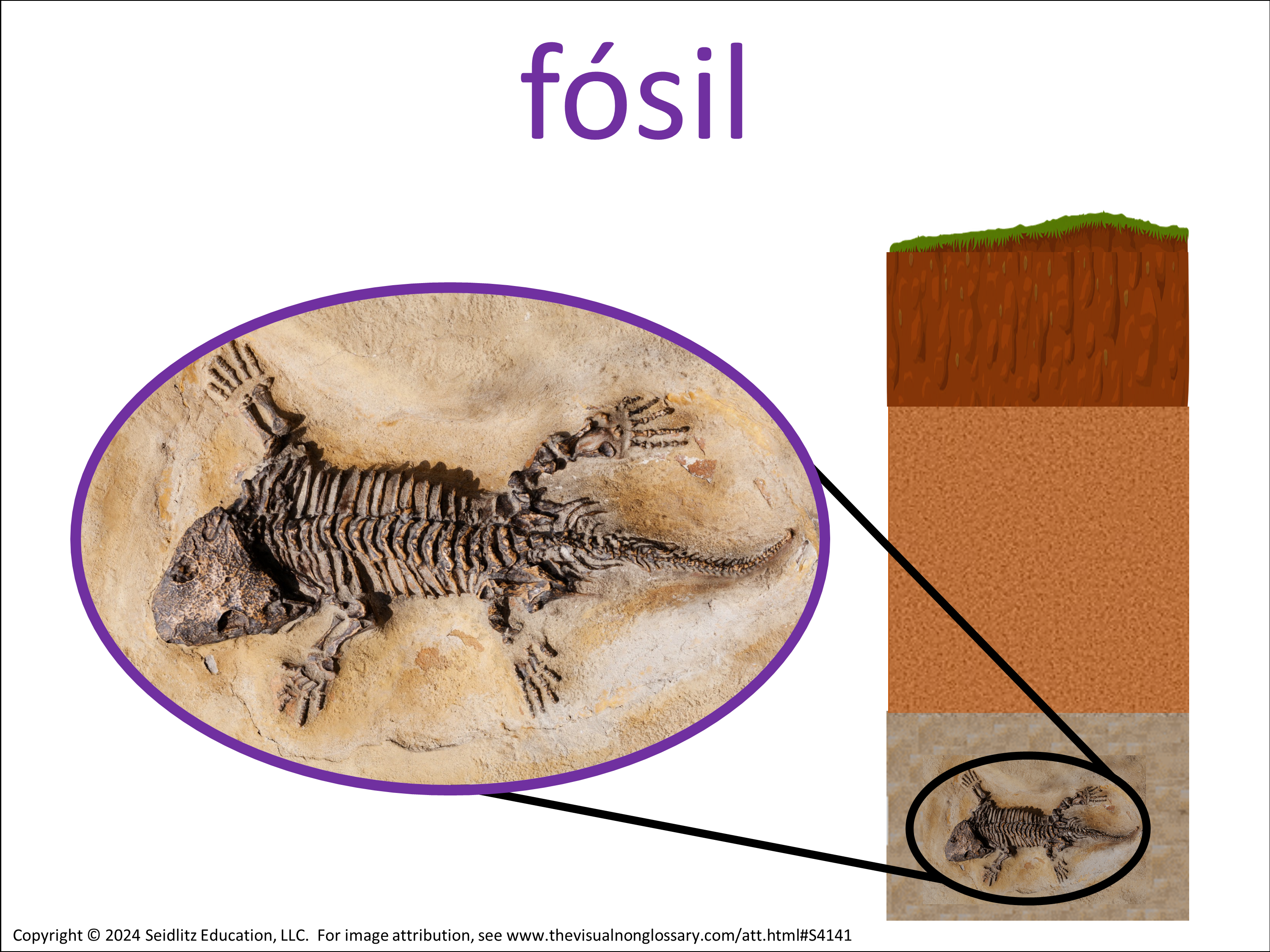
- Algunos fósiles parecen huesos o conchas de seres vivos
- Una impresión puede mostrar la forma de una planta
- Los fósiles se encuentran en capas de roca
- Diferentes fósiles pueden venir de diferentes medios ambientes
- Los fósiles pueden parecerse a partes de un organismo actual
EXTENDING THE DISCUSSION
After the observational question, randomly call on one or more students to share what they or their partner answered. Then ask the class, “Did anyone notice…?” using the suggestions above or anything else you’ve noticed.
After the observational question, randomly call on one or more students to share what they or their partner answered. Then ask the class, “Did anyone notice…?” using the suggestions above or anything else you’ve noticed.

Students might wonder:
- ¿Cuánto tiempo tarda en formarse un fósil?
- ¿Por qué algunos seres vivos se conservan y otros no?
- ¿Qué tipo de medio ambiente existía cuando se formaron estos fósiles?
- ¿Cómo saben los científicos cómo era el organismo?
- ¿Todos los seres vivos pueden convertirse en fósiles?
EXTENDING THE DISCUSSION
After students have shared what they notice, ask the class, “Did anyone wonder…?” using the suggestions above or anything else you might think is interesting or relevant to the lesson.
After students have shared what they notice, ask the class, “Did anyone wonder…?” using the suggestions above or anything else you might think is interesting or relevant to the lesson.
Example student responses
To the observational question, ¿Cómo se forman los fósiles?
LOW-LEVEL
Los fósiles se forman cuando plantas o animales quedan cubiertos por tierra.
HIGH-LEVEL
Los fósiles se forman cuando los restos o impresiones de un organismo vivo quedan enterrados en sedimento con el tiempo.
RESPONDING TO RESPONSES
Emphasize and celebrate each student’s use of the key vocabulary to support a culture of “no wrong answers.”
Emphasize and celebrate each student’s use of the key vocabulary to support a culture of “no wrong answers.”