


Life Sciences
Evolution and Diversity
Vertical Alignment
TEKS:
| 3rd | 3.12(D) |
| 4th | 4.12(C) |
| 7th | 7.10(A) |
| Bio | B.9(A)B.9(B) |
NGSS:
| 4th: | 4-ESS1-1 |
| MS: | MS-ESS1-4 MS-ESS2-3 MS-LS4-1 MS-LS4-2 |
Linked To

Downloads
- Download Visual
- Word wall visual
- Lesson Plan
-
Lesson Materials
-
 Teacher Guide
-
 Leveled Reading Passages
-
.svg.png)
Google Drive
Structured Conversation Questions
Observational
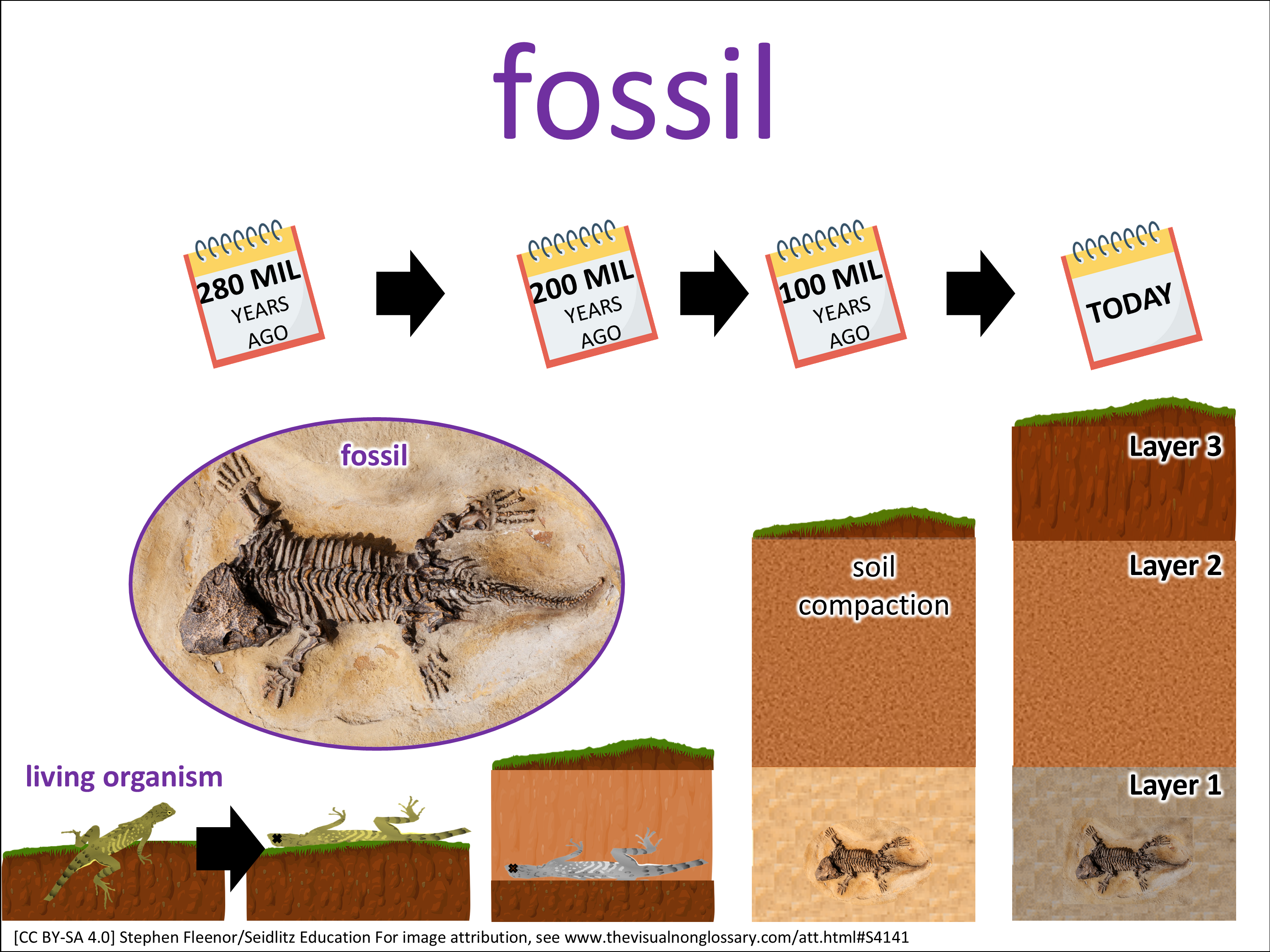
How do fossils form?
Fossils form by…Relational
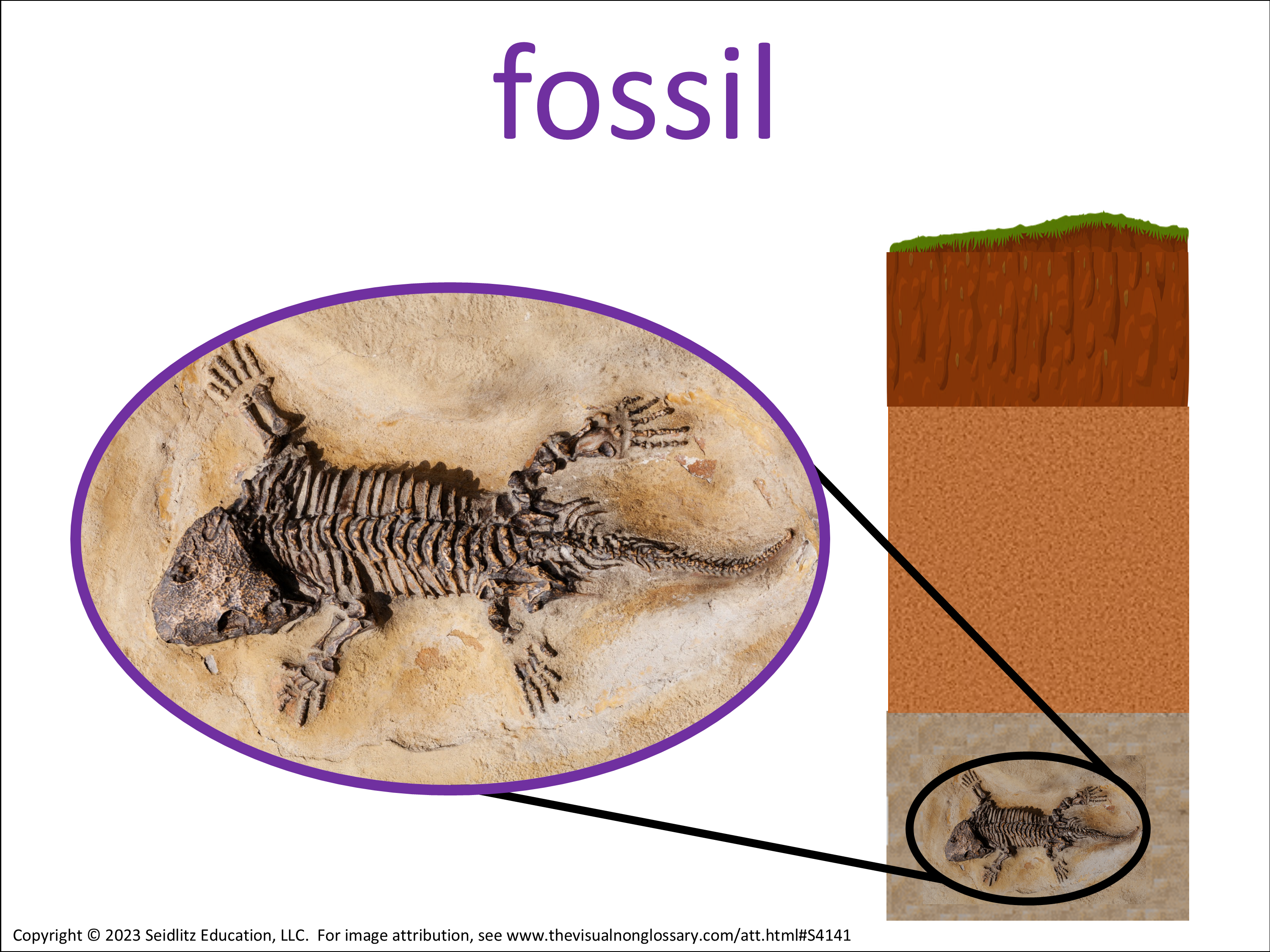
How is a fossil related to a living organism?
A fossil is related to a living organism because…Inferential
What kind of information could fossils tell you about past environments? Why?
Based on fossils, I could infer… about past environments because…
Please log in to comment.
Students might notice in this visual:
- Some fossils look like bones or shells from once living things
- An imprint can show the shape of a plant
- Fossils are found in layers of rock
- Different fossils may come from different environments
- Fossils can look similar to parts of an organism we see today
EXTENDING THE DISCUSSION
After the observational question, randomly call on one or more students to share what they or their partner answered. Then ask the class, “Did anyone notice…?” using the suggestions above or anything else you’ve noticed.
After the observational question, randomly call on one or more students to share what they or their partner answered. Then ask the class, “Did anyone notice…?” using the suggestions above or anything else you’ve noticed.

Students might wonder:
- How long does it take for fossils to form?
- Why are some living things preserved but others are not?
- What kind of environment existed when these fossils formed?
- How do scientists know what the organism looked like?
- Can all plants and animals become fossils?
EXTENDING THE DISCUSSION
After students have shared what they notice, ask the class, “Did anyone wonder…?” using the suggestions above or anything else you might think is interesting or relevant to the lesson.
After students have shared what they notice, ask the class, “Did anyone wonder…?” using the suggestions above or anything else you might think is interesting or relevant to the lesson.
Example student responses
To the observational question, How do fossils form?
LOW-LEVEL
Fossils form by plants or animals getting covered by dirt.
HIGH-LEVEL
Fossils form when the remains or imprints of a living organism are buried in sediment over time.
RESPONDING TO RESPONSES
Emphasize and celebrate each student’s use of the key vocabulary to support a culture of “no wrong answers.”
Emphasize and celebrate each student’s use of the key vocabulary to support a culture of “no wrong answers.”
APRIL ZAMORA
The fossil picture is in Spanish.
10-24-24
Stephen Fleenor
You're right! Thanks for catching that, fixed it!
10-25-24